
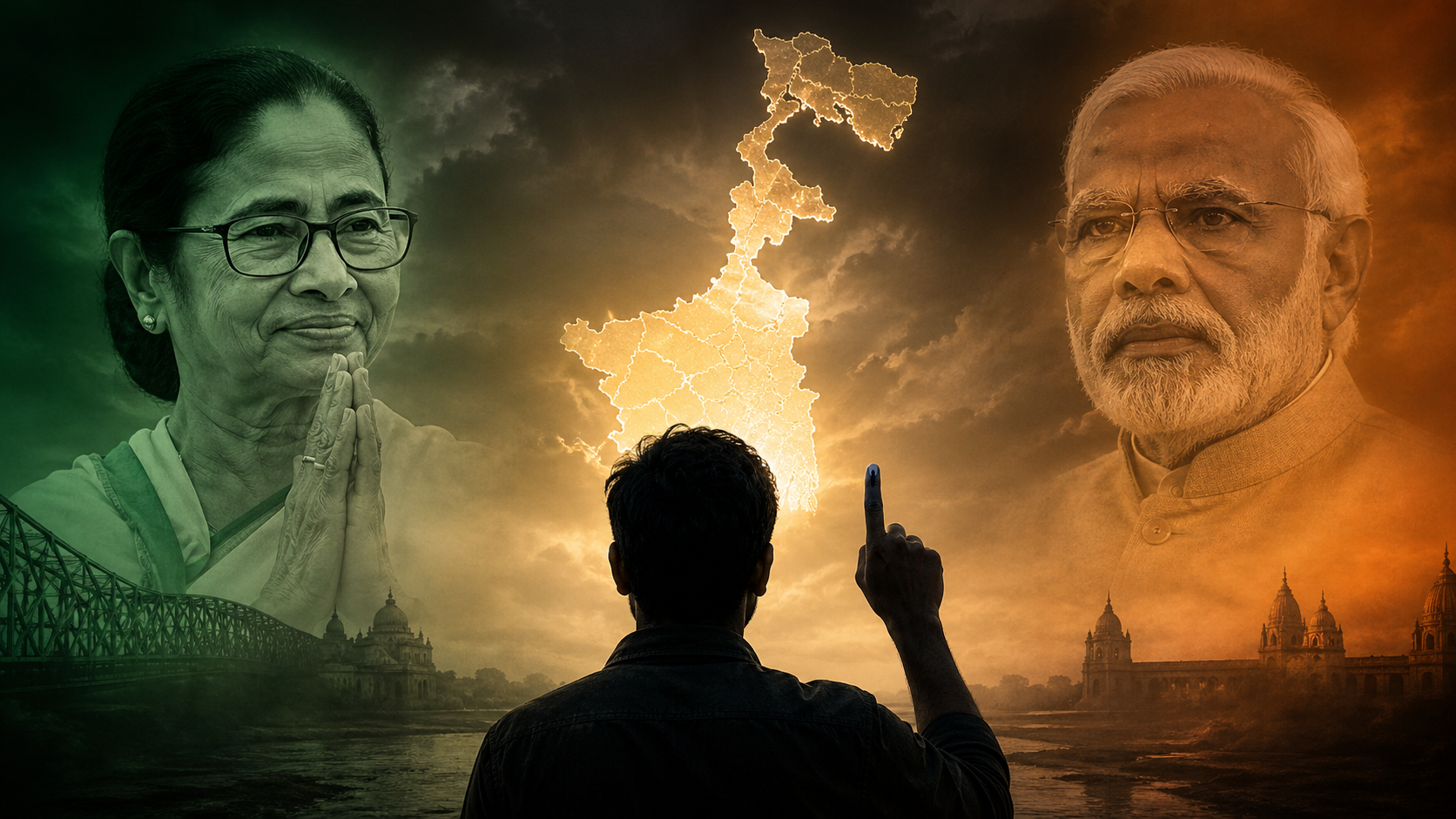

West Bengal’s electoral contest appears far more nuanced than what exit polls alone suggest. While several projections indicate an advantage for the Bharatiya Janata Party (BJP), the on-ground mood hints at a closely fought battle rather than a clear sweep.
A key factor shaping this dynamic is the continued influence of Chief Minister Mamata Banerjee. Her personal credibility and strong association with Bengali identity—often referred to as “Bangla Asmita”—remain powerful forces among voters. Even after 15 years of governance and visible anti-incumbency, many still see her as the most prominent voice representing Bengal’s cultural and political interests.
Although dissatisfaction exists around governance issues, corruption allegations, and local administrative challenges, it hasn’t fully translated into a decisive anti-government wave. Instead, voters appear to be weighing their choices carefully, creating a more balanced and unpredictable contest.
The BJP’s campaign has gained momentum over time, especially after Prime Minister Narendra Modi referenced the symbolic connection of the Ganga flowing from Bihar to Bengal following the NDA’s Bihar win in 2025. This was widely interpreted as a signal to intensify the party’s focus on West Bengal. Since then, BJP leaders have aggressively targeted the ruling All India Trinamool Congress (TMC) on governance and law-and-order concerns.
Union Home Minister Amit Shah has expressed strong confidence, even claiming significant gains in early polling phases. However, conversations across constituencies suggest a more cautious voter sentiment. In several regions, issues such as minority appeasement have become central to political discourse, influencing voting patterns along community lines.
Muslim-majority areas are expected to largely support the TMC, while the BJP seems to have strengthened its position in several Hindu-majority constituencies. Despite this polarization, the election lacks the sweeping wave of change seen in 2011, when Mamata Banerjee ended the Left Front’s decades-long rule.
Another notable aspect of this election is the subdued nature of public expression. Many voters appear hesitant to openly criticize the ruling establishment, often citing concerns about potential repercussions in their daily lives.
The BJP has framed the election as a fight against entrenched power structures and political intimidation. Yet, Mamata Banerjee’s enduring popularity and the emotional resonance of regional identity continue to challenge the narrative of an easy BJP victory.
If exit poll predictions hold true on May 4 and the BJP succeeds in forming a government, it would mark a historic milestone for the party in West Bengal. However, the current ground reality suggests that the outcome may be far more competitive than early projections indicate.